Why Trust and Authority Are Your Real SEO Superpowers
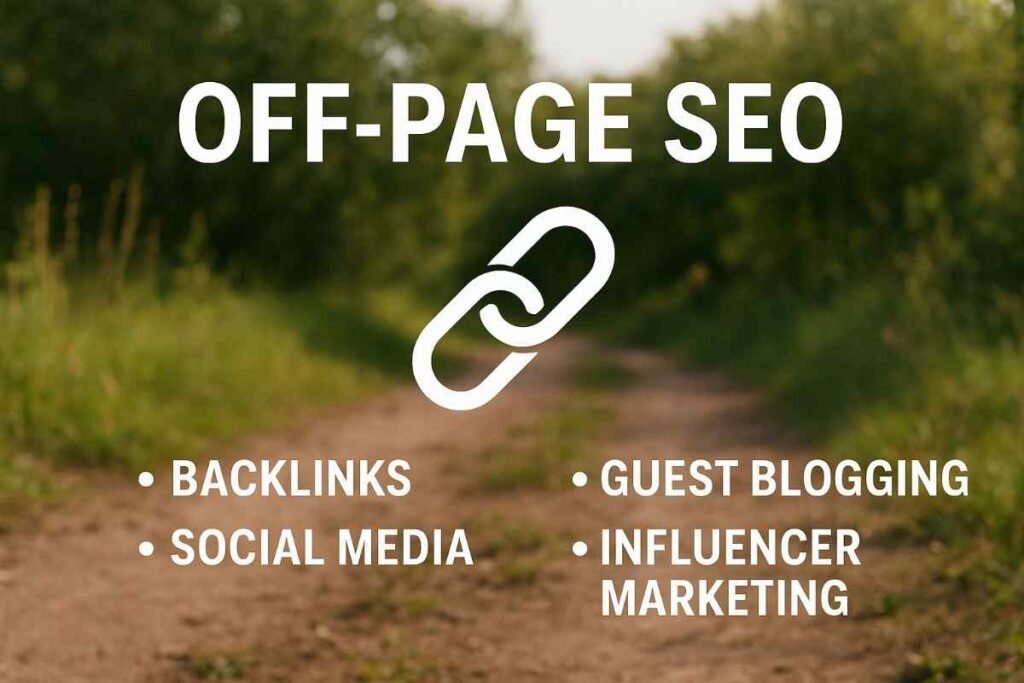
Table of Contents
Introduction – Why Off-Page SEO Still Matters in 202
Google changes its rules all the time, but one thing hasn’t gone away: it only wants to rank sites it can actually trust. And here’s the thing — that trust isn’t built only by stuffing your pages with keywords or tweaking your titles. It’s built by what happens outside your website. That’s what we call off-page SEO. Most people think it’s just backlinking, but it’s way more than that. It’s the mentions your brand gets, the reviews people leave, the conversations happening about you, and how much authority you’ve built in your space. Nail these, and you’re not just another site — you become the site people (and Google) actually listen to.
What Is Off-Page SEO?
Think about your own life for a second. You can tell people that you are good at your job, but honestly, most folks won’t buy it right away. Now, imagine your boss goes around saying the same thing, your coworkers recommend you on LinkedIn, and even a few strangers leave glowing reviews about working with you. Suddenly, your claim carries weight. People start to believe you because others are vouching for you.
That’s exactly how off-page SEO works. It’s your reputation on the internet. You can polish your website all you want (that’s on-page SEO), but until the world outside starts talking about you linking to your site, mentioning your brand, sharing your work, you’re just another voice in the crowd. Off-page SEO is that social proof Google looks for before it decides, “Yeah, this site deserves to be seen.”
Your website can be perfect inside — fast loading, clear content, beautiful design (that’s on-page SEO). But if the rest of the internet isn’t talking about you, Google sees you like a talented singer who never leaves their bedroom. You stay invisible.
Off-page SEO is all that outside buzz: other websites linking to yours, people mentioning your brand, social shares, reviews, podcasts, guest posts — basically the internet vouching for you. It’s not just about backlinks anymore, n 2025, it’s about trust, authority, and visibility. The more people talk about you, the more Google believes you’re someone worth showing on page one.
The Core Pillars of Off-Page SEO in 2025
If on-page SEO is about dressing well and speaking clearly, off-page SEO is about your reputation when you’re not in the room. Here’s what really shapes it in 2025:
1. Backlinks – The internet’s word-of-mouth.
Imagine you’re looking for a new restaurant in town. You check Google, but what really convinces you is when a foodie friend says, “Trust me, their pasta is unbeatable.” That’s a backlink. When other credible websites “recommend” you by linking to your content, Google sees it as proof you’re worth visiting. But here’s the catch: not all recommendations are equal. A link from The Times of India carries more weight than one from your cousin’s blog. Quality > quantity, always.
2. Brand Mentions & Trust Signals – Street credibility.
Even if someone doesn’t link to you, just being talked about matters. Suppose your name pops up in a Reddit thread, a local news article, or an industry podcast. Those unlinked mentions tell Google you’re part of the conversation. Reviews on Google My Business or Trustpilot work the same way — they’re like digital reputation points. Together, these build your E-E-A-T (Experience, Expertise, Authoritativeness, Trust). Think of it as your online report card.
3. Social & Community Engagement – Digital chatter.
Google might not treat every social share as a ranking factor, but it absolutely notices relevance. If people are talking about you brand on X (Twitter), LinkedIn, or other forums like Quora or Discord, it signals relevance. Think of a street performer: the bigger the crowd clapping and recording, the more others stop to watch. Your content works the same way — the more people engage, the more visibility snowballs.
4. Local Citations – Proof you exist in the real world.
If you run a café in Lucknow, showing up in Google Maps, Yelp, Justdial, and local food blogs tells both customers and search engines that you’re real and active. Imagine a tourist asking five locals for directions — if all five point to your café, that’s authority. Local citations are those “pointers.” For businesses tied to a place, these are make-or-break.
Link Building Strategies That Actually Work in 2025
Link building used to be the Wild West. People stuffed links in random blog comments, bought them in bulk, and crossed their fingers hoping Google wouldn’t catch them. That doesn’t fly anymore. If you want links today, you need to earn them the way you’d earn respect in real life — by actually giving people something worth talking about.
1. Make stuff people can’t ignore.
You know that one friend who always shares the juiciest facts or funniest memes in the group chat? Be that friend on the internet. Create guides, research, or tools that others have to reference. Example: a real “2025 Digital Marketing Salary Report.” Journalists eat that stuff up.
2. Think PR, not begging.
Instead of cold emailing 100 bloggers with “Hey, link to me please,” pitch a story that’s actually newsworthy. Running a fitness blog? Share data on “The Top 5 Exercises Indians Are Obsessed With in 2025.” Media sites and niche blogs will link to you without a second thought.
3. Guest posts, but with standards.
Don’t waste time on spammy “write for us” sites. One thoughtful guest article on a respected platform your audience already trusts is worth 50 garbage backlinks.
4. Hang where people actually talk.
Reddit threads, Quora answers, LinkedIn posts, Discord groups. Be genuinely helpful. When people see you as the go-to voice, links follow naturally.
5. Partner up.
Interview someone smarter than you, collaborate on a report, or swap insights with an influencer. When they share it, you ride their credibility wave.
Bottom line? Link building in 2025 is just being useful, loud, and visible in the right places. The spammy hacks are dead. The human game wins.
Social Media & Content Distribution as Off-Page SEO
Let’s clear one thing up: Google doesn’t rank your page higher just because you got 200 likes on Instagram. But here’s the catch, social media is often the spark that gets your content seen, shared, and eventually linked to, and those links do matter.
Think of LinkedIn. Post a smart breakdown of your latest guide, and suddenly industry folks start noticing. Some will quote you in their own blogs, dropping you backlinks in the process. Or take YouTube: a quick video summarizing your article can drive thousands of eyeballs and if even a few of those viewers are bloggers, you’ve got potential link juice coming your way.
Reddit, Quora, and niche communities work the same way. Participate in productive conversations, share helpful content, and people will remember (and reference) you.
So while social shares aren’t a direct ranking factor, they give you relevance that leads to mentions, backlinks, and authority, the exact things Google does care about.
Beyond Links: Reputation, Reviews & Brand Signals
Here’s the truth: in 2025, Google is looking at way more than just who’s linking to you. It’s also asking, “Do people actually trust this brand?” That’s where reputation and reviews come in.
Think about a local restaurant. While two places might serve the same food, but the one with 500 positive Google reviews will always be a better bet for customers than the one with five reviews from 2019. Search engines think the same way. Platforms like Google Business Profile, Trustpilot, and even industry-specific review sites are signals that you’re credible, not some random fly-by-night site.
And don’t underestimate unlinked mentions. If people keep talking about your brand on Twitter, Reddit, or niche blogs, even without a hyperlink, Google takes notice. It’s like word-of-mouth in the digital world.
At the end of the day, links still matter. But if your site looks shady, has poor reviews, or no brand presence, no number of backlinks will save you. Authority and trust are the real ranking powerhouses now.
Tools Beginners Can Use for Off-Page SEO
Off-page SEO sounds fancy, but honestly, it can feel like wandering blindfolded through a jungle, you don’t know which path leads to real authority and which one lands you in quicksand. That’s where the right tools come in. They’re not magic, but they are like a flashlight and a map, helping you spot which backlinks, mentions, or PR opportunities are actually worth your time.
Start with Ahrefs or SEMrush. These are like x-ray glasses for your website, you can see who’s linking to you, spy on your competitors’ backlinks, and figure out which ones are actually worth chasing.
Then there’s Google Search Console. It’s free, and it’s Google’s own way of telling you, “Here’s how we see your site.” You can track backlinks, monitor performance, and even disavow shady links that could drag you down.
Need ideas that people will actually share? BuzzSumo shows you the most popular content in your niche so you don’t waste time writing stuff no one cares about.
And if you want authority links from news sites or magazines, tools like HARO (Help a Reporter Out) or Qwoted connect you directly with journalists looking for expert quotes. Land one, and you’ve got a backlink money can’t buy.
Common Mistakes Beginners Make in Off-Page SEO
If you’re new to off-page SEO, it’s easy to get lured by shortcuts that look shiny but end up sinking your site. One of the biggest traps? Buying spammy backlinks. Sure, paying $20 for 1,000 links sounds tempting, but Google’s smarter than that, those links can tank your rankings instead of boosting them.
Another common mistake is obsessing over numbers. Beginners often chase backlink quantity when what really matters is relevance. Ten links from respected sites in your niche are worth more than a hundred random ones from shady directories.
And finally, many skip the bigger picture: brand-building and trust. Google’s E-E-A-T (Experience, Expertise, Authoritativeness, Trustworthiness) isn’t just jargon, it’s Google asking, “Would I trust this site if it were a person?” If the answer’s no, no link-building trick will save you.
How to Build a Sustainable Off-Page SEO Strategy in 2025
Here’s the thing: off-page SEO isn’t a one-night stand, it’s a relationship. If you’re serious about ranking, you’ve got to play the long game. That means no shady backlink farms, no chasing shortcuts that promise “instant results.” Google’s not dumb and your reputation’s too valuable to gamble.
Instead, build a healthy mix: get quality backlinks, show up on social where your audience hangs out, and earn trust with reviews, mentions, and authority-building moves. Think of it like building your street cred online.
And don’t just wing it, track your progress. Tools like Ahrefs, SEMrush, or even Google Search Console are your fitness tracker for SEO where you’ll see what’s working, what’s not, and where to push harder.
The real secret? Stop trying to game the system. Start proving you deserve the spotlight.
Conclusion & Next Steps
At the end of the day, off-page SEO comes down to only one thing: do people trust you? Authority isn’t built overnight, and there’s no magic button to skip the line. The sites that rise to the top are the ones people actually vouch for — and Google’s just mirroring that reality. If you back up those trust signals with strong on-page SEO, you’ve got the ultimate combo. That’s how you stop chasing rankings and start earning them.
Ready to go deeper? Check out my Beginner’s SEO Guide 2025 — it’s the playbook you’ll want by your side.